Newsletter
John’s Journal February 2026 Edition
Dear Friends and Neighbors,
As we move through the early weeks of the legislative year, much of my work in Sacramento has focused on maintaining the essential services Californians rely on while supporting the long-term strength of our Central Coast communities.
This session, I’ve introduced 17 bills addressing health care access, public services, and local priorities across our region. These proposals reflect what I’m hearing from residents, local governments, and community organizations – from strengthening pathways into state employment for California Conservation Corps members to making it easier for nonprofits to access critical funding.
The Legislature also moved quickly this month to respond to federal funding disruptions that threatened clinics across California. I authored SB 106 to provide bridge support for reproductive health care providers and help prevent service reductions, ensuring continued access to cancer screenings, birth control, and other preventive care.
At the same time, the Senate Budget and Fiscal Review Committee is beginning work on this year’s state budget. In recent hearings, we’ve examined how federal proposals such as HR-1 could affect California’s fiscal outlook, particularly for programs like Medi-Cal. I’ve emphasized that while California has built stronger rainy-day reserves than in past downturns, those reserves are designed to manage uncertainty – not replace long-term federal support. Our task now is to model potential impacts and plan carefully as we approach the May budget revision.
We’re also advancing measures to help smaller communities maintain critical services – including providing flexibility for towns like San Juan Bautista to invest in water infrastructure and helping ensure continuity of services for older adults and people with disabilities in San Luis Obispo County. Work is also underway to address the fiscal impacts of major energy decisions affecting our region, including those related to Diablo Canyon.
There are real challenges ahead, but California is well positioned to respond thoughtfully. I look forward to continuing this work in partnership with you in the months ahead.
Warm Regards,
JOHN LAIRD
Senator, 17th District
Capitol Update
With the bill introduction deadline behind us, the 2026 legislative session is now fully underway. I’ve introduced 17 measures this year focused on health care access, local infrastructure, nonprofit funding access, and strengthening pathways into public service. Together, these bills reflect both statewide priorities and the needs I continue to hear from communities across the Central Coast.
One key development this month was the passage of SB 106, which provides $90 million in one-time funding to reproductive health care providers affected by federal cuts. As I shared on the Senate floor, this measure is intended to prevent service reductions or clinic closures – including situations like the closure we saw in Santa Cruz last year – and to maintain access to preventive care that many families depend on. These services remain an important part of the region’s health care network.
Locally focused legislation continues to move forward. SB 1081 gives small communities such as San Juan Bautista greater flexibility in addressing state water quality fines by allowing penalty funds to be reinvested into infrastructure improvements. This approach supports long-term water quality and helps ensure that limited local resources strengthen systems rather than simply pay penalties.
SB 1261 helps protect the Aging and Disability Resource Connection (ADRC) in San Luis Obispo County during an administrative transition. The ADRC serves as a “No Wrong Door” hub connecting older adults, people with disabilities, and caregivers to essential services, and this bill helps maintain continuity during the transition period.
In recognition of National Wear Red Day, I also joined colleagues in the annual “Capitol Goes Red” event to raise awareness about cardiovascular disease, the leading cause of death for women in the United States. I’m grateful to the health professionals and community organizations across the Central Coast who continue working to improve prevention, education, and early detection.
As the session progresses, my focus remains on practical, community-centered policies that support local governments, nonprofit partners, and the residents we serve.
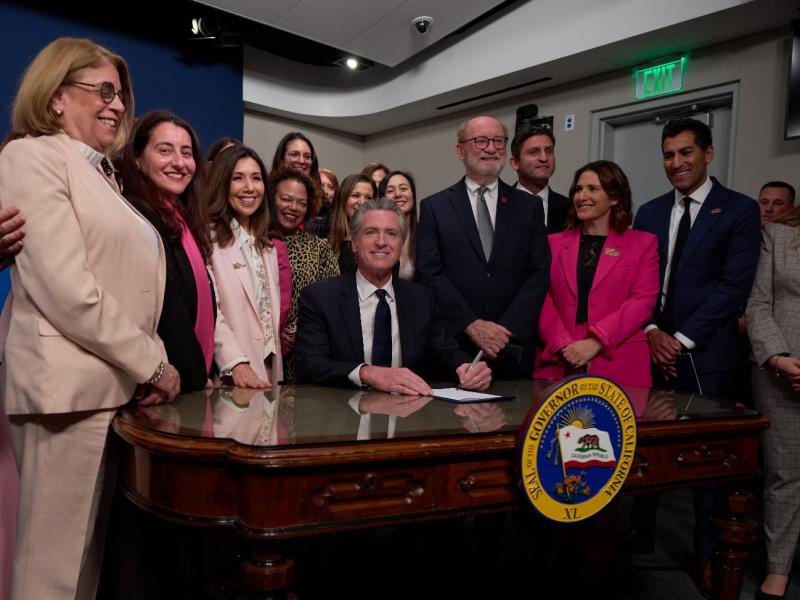
With Governor Newsom and colleagues for the signing of SB 106, legislation I authored to help stabilize funding for reproductive health providers and maintain access to essential care for communities across California.
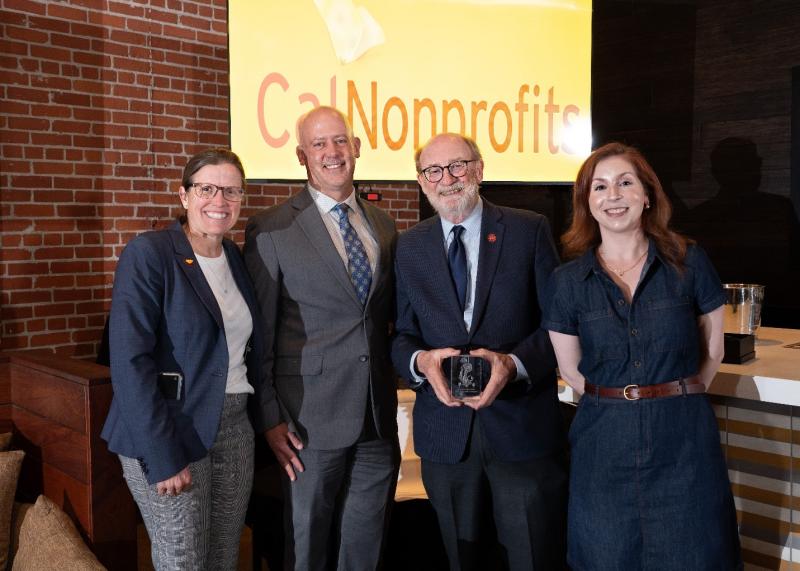
Grateful to receive the inaugural Nonprofit Champion Award from CalNonprofits. As a former nonprofit executive director, this recognition means a great deal to me. Supporting nonprofit organizations has long been a priority, and I appreciate the work they do every day to strengthen communities across California. I’ve introduced SB 1288, sponsored by CalNonprofits, to make it easier for nonprofits to access beneficiary funds left to them so those resources can be put to work in our communities.
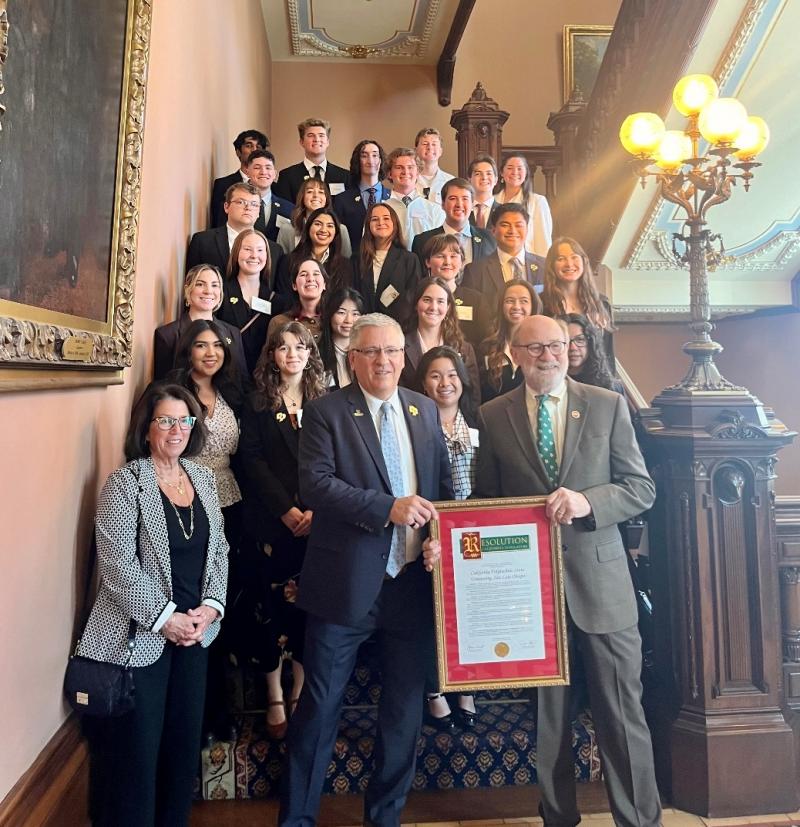
Honored to introduce Cal Poly San Luis Obispo students on the Senate floor and recognize their accomplishments alongside President Jeff Armstrong. Their “Learn by Doing” work in research, leadership, and creativity reflects the talent and dedication coming out of the Central Coast.
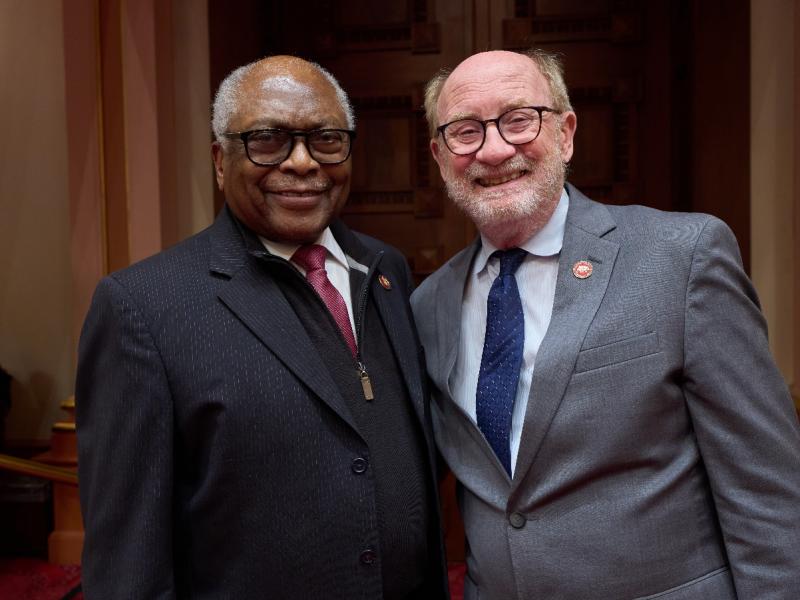
Honored to welcome Rep. James Clyburn from South Carolina to the Senate floor. His long record of public service and steady leadership has helped expand opportunity and strengthen communities across the country.
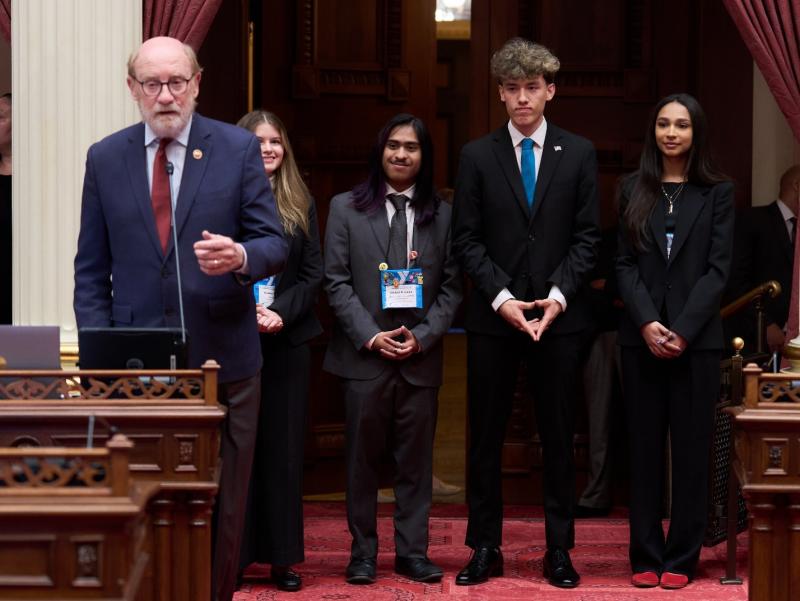
Pleased to welcome student leaders from the YMCA Youth and Government program to the Senate floor. As a former Model Legislature Senator and Committee Chair, I know firsthand how meaningful this experience can be in helping young people understand public service and civic responsibility. It’s encouraging to see students engaging thoughtfully in the legislative process.
District Update
Recent winter storms have brought heavy rain, debris flows, and travel disruptions across Santa Cruz and Monterey counties. Portions of Highway 1, Highway 68, and Carmel Valley Road have experienced debris-related closures, and Caltrans crews continue working to reopen routes safely as conditions allow. With some communities experiencing power outages, I encourage residents to stay informed through PG&E alerts and to use caution when traveling. I appreciate the efforts of first responders, public works crews, and utility teams assisting our region during these storms.
I am also preparing legislation to address the unitary tax shortfall affecting San Luis Obispo County relating to operations of the Diablo Canyon Power Plant. This proposal is intended to help stabilize local budgets and ensure that energy policy decisions reflect the fiscal realities facing the communities most directly impacted.
Our region is also mourning the passing of José Antonio Jiménez, trustee of the Alisal Union School District. José Antonio dedicated decades to public education and to supporting families in the Salinas Valley. His leadership made a lasting difference for local schools and students, and my thoughts are with his family and all who worked alongside him.
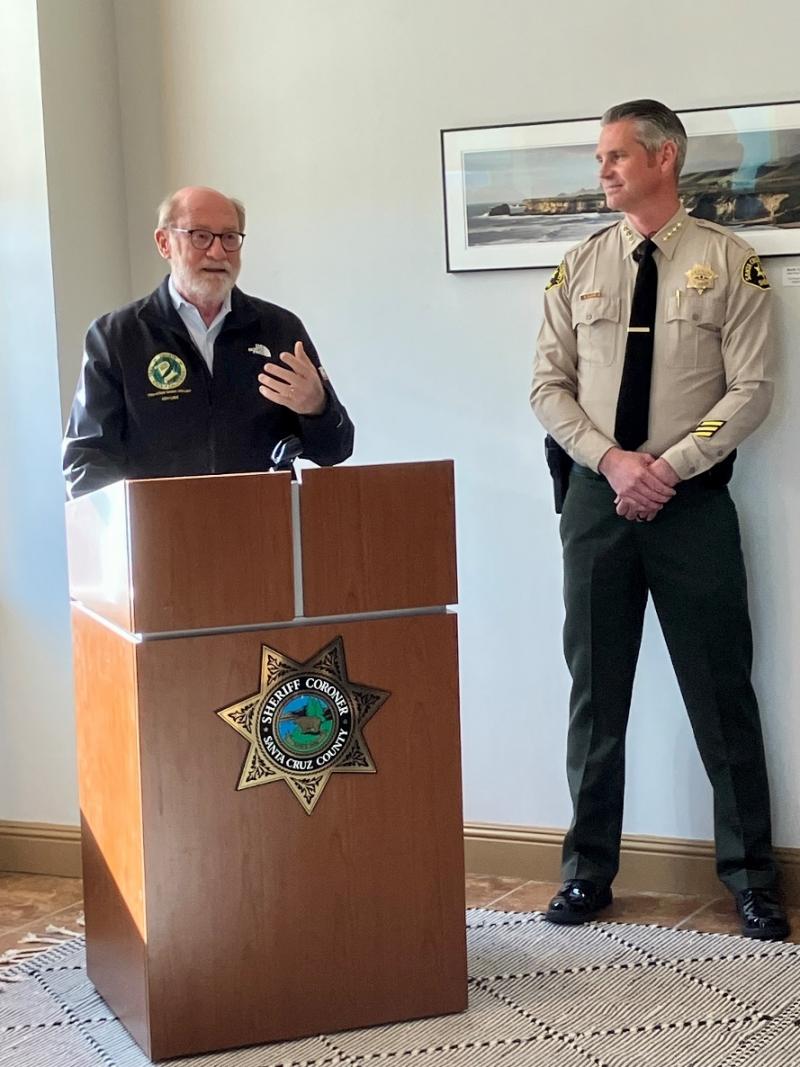
Glad to attend the grand opening of the new Santa Cruz County Sheriff’s Office substation in Davenport. The North Coast is not just a destination – it’s home to people who live and work there year-round, and this investment helps ensure the community has the public safety presence it deserves.
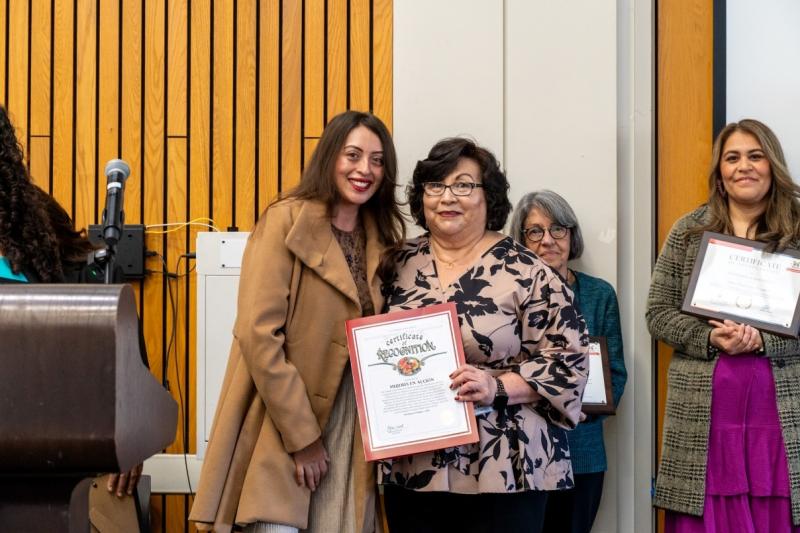
Pleased to have our staffer Marisa Hernandez recognize Maria Elena Manzo at the 10th anniversary of Mujeres en Acción. Her work continues to support and uplift women across Monterey County and help them reach their goals.
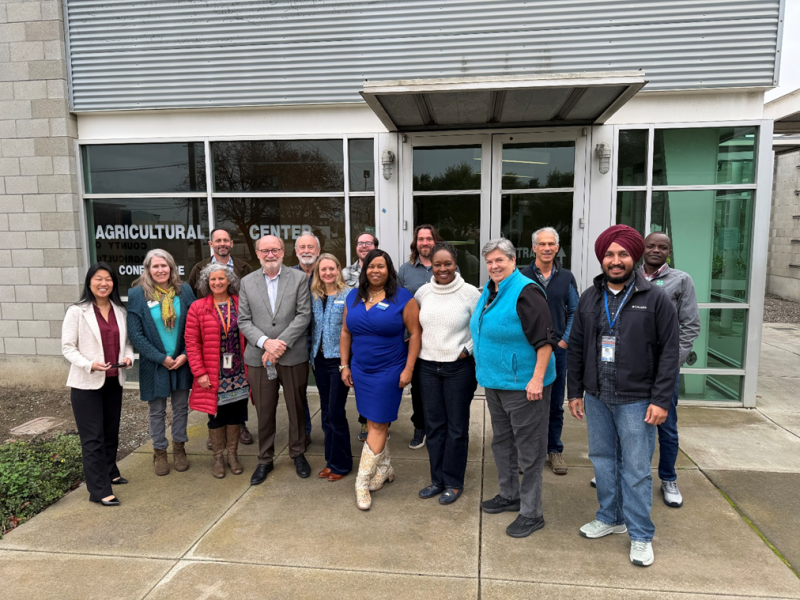
Appreciated the opportunity to meet with UC Agriculture and Natural Resources leadership on the Central Coast. Early in my Senate service, I worked to help restore UC Cooperative Extension funding to historic levels, and this visit was a chance to check in on how the program continues to support farmers and local communities across the state. UC Cooperative Extension plays an important role in bringing research, education, and community programs to Monterey, San Benito, and Santa Cruz counties.